
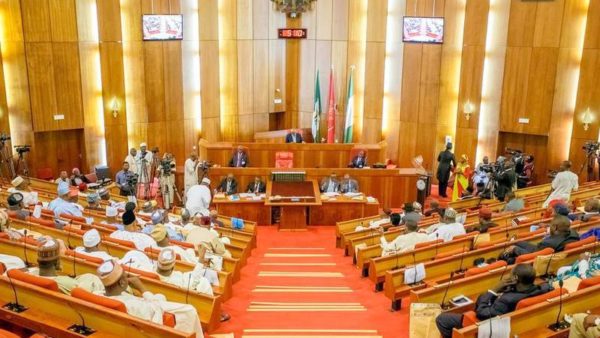

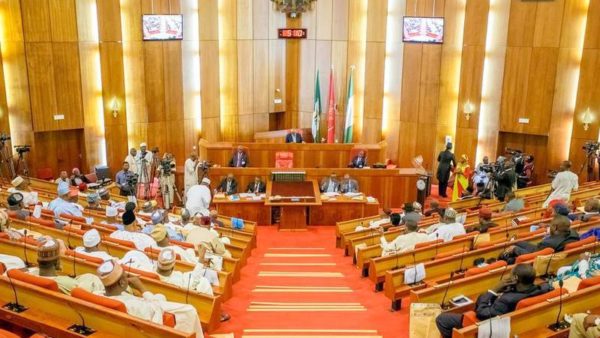
The Nigeria Senate, presided over by pliable Ahmad Lawan, has set a world record in parliamentary history, confirming 20 out of the 43 ministerial nominees appointed by President Muhammadu Buhari, without actually grilling them – not even asking them a single question.
This is also a new record in modern Nigerian parliamentary history.
The 23 nominees, who were not questioned are Chris Ngige, Hadi Sirika, Muhammad Bello, Gbemisola Saraki, Pauline Tallen, Sharon Ikeazor, Lai Mohammed, Rotimi Amaechi, Timipre Sylva, Zainab Ahmed, Godswill Akpabio, Sa’adiya Umar Farouk and Otunba Adeniyi Adebayo.
Others include Dr. Ramatu Aliyu, George Akume, Olorunnimbe Mamora, Tayo Alasoadura, Maryam Katagum, Abubakar Aliyu, Mustapha Shehuri, Ambassador Zubairu Dada, Emeka Nwajiuba and Maigari Dingyadi.
Based on senate tradition of not questioning former colleagues, eight nominees were alowed to enjoy the privilege and they include Ngige, Mamora, Sirika, Alasoadura, Akume, Nwajuiba, Saraki and Akpabio.
But the Senate President extended the privilege of ‘bow and go’ to former state lawmakers, women and ‘special’ nominees.
Some lawmakers, especially members of the opposition Peoples Democratic Party, PDP, had kicked against the ‘bow and go’ exercise but Mr. Lawan refused to listen.
Minority Leader, Eyinnaya Abaribe, who observed the take-a-bow syndrome in the chamber, raised a constitutional point of order (Order 147)(2), noting that the exercise had turned out to be an endorsement screening.
He said, “Mr. President of the Senate, this is a confirmation hearing and not an endorsement hearing.”
Recall also that the Kogi-West lawmaker, Senator Dino Melaye, had while speaking on Channels Television’s Politics Today programme on Sunday, criticized the ongoing screening exercise, describing it as a “a beautiful nonsense.”
He also faulted the failure of president Muhammadu Buhari to attach portfolios to the names.
The current senate president, Lawan, was the choice of the presidency and the chieftains of the ruling All Progressives Congress, APC. When he emerged senate president, Nigerians had feared that the significance of the upper house of parliament, especially with regard to checks and balances, would be enormously eroded.
 cpcnews.org