
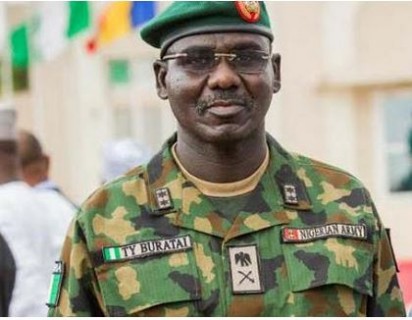

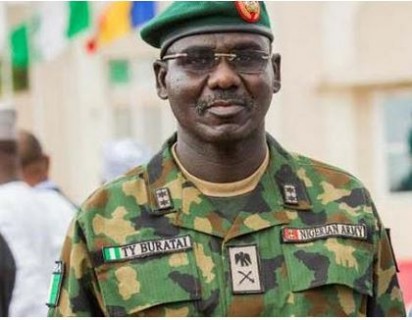
The Federal High Court on Tuesday ordered the suspension of the military exercise dubbed “Operation Positive Identification,” which human rights lawyer, Femi Falana (SAN), said infringes on his rights as citizen and that of other Nigerians.
The Nigerian Army had said it would begin the exercise this month across the country but on October 25, Mr. Falana filed a suit against the Nigerian Army, the Chief of Army Staff, and the Attorney-General of the Federation, asking the court to declare the operation scheduled for November 1 to December 23 as unconstitutional, illegal, null and void.
In his suit against the army, the Senior Advocate of Nigeria averred that the operation violates his right and that of other Nigerian citizens to liberty, “as encapsulated in Section 35 respectively of the Constitution of the Federal Republic of Nigeria, 1999 as Amended and Article 6 of the African Charter on Human and Peoples Rights (Ratification and Enforcement) Act, (Cap A10) Laws of the Federation of Nigeria, 2004.”
According to him, the respondents have no constitutional authority to act in the proposed manner. “Neither the Constitution nor the Armed Forces Act Cap A20 LFN, 2004 has empowered the Nigeria Army to arrest any citizen who is not subject to service law.”
Falana said that “By virtue of Section 215 (3) of the Constitution, the Nigeria Police Force ‘has the exclusive power to maintain law and order and secure public safety and public order in the country’ and not the army.”
He added that under section 217(1) of the Constitution, the Nigerian President could only deploy the armed forces for the suppression of insurrection and acting in aid of civil authorities to restore law and order.
“There is no insurrection in every part of the country which the Nigeria police cannot contain to warrant the deployment of armed troops all over the country from November 1, 2019 to December 23, 2019.
“The 1st respondent (the Nigerian Army) under the leadership of the 2nd respondent is not empowered to take over police duties and the President and Commander in Chief of the Armed Forces lacks the power to deploy members of the armed forces in the maintenance of internal security in any part of the country by virtue of Section 217 (a) (b) and (c) of the 1999 Constitution, as amended.”
At the hearing on Tuesday, the Attorney-General was represented by Fiyinfoluwa Sobowale from the Ministry of Justice but the Nigerian Army and the Chief of Army Staff, who were listed as 1st and 2nd respondents in the matter had no legal representation.
Falana went on to tell the court that they were duly served and that he had spoken with their counsel on a probable date to commence substantial hearing of the matter.
However, Mr Sobowale sought an adjournment to enable them properly respond to the issues.
Falana insisted on the closest date possible, pointing out that the matter was time-bound and there would be no point in the case if the parties continued with their actions while the matter is yet to be heard in court.
He told the court that the only way the date suggested by Mr Sobowale would be acceptable is if the ministry agreed to ensure that the status quo is maintained.
Justice Rilwan Aikawa, agreed with the senior advocate of Nigeria, saying due to the nature of the case, a delay would reduce the case to a mere academic exercise.
The judge then ordered, ”in view of the agreement between counsel, I hereby order the 1st and 2nd defendants to maintain the status quo pending the determination of the case.”
He adjourned the matter to November 18 for substantive hearing.
 cpcnews.org