
By Charles Ofoji

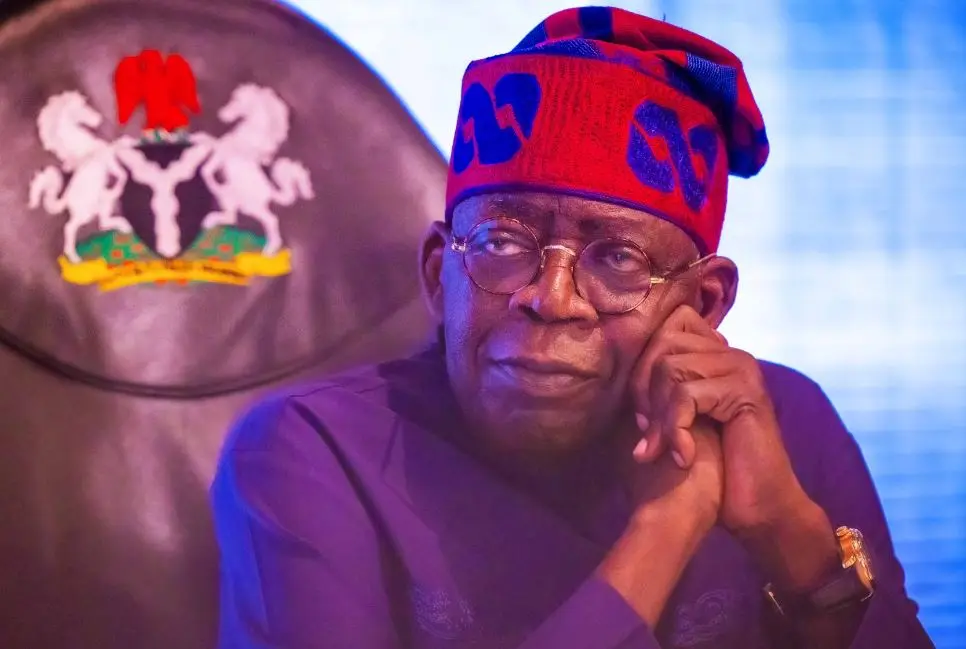
The lives of Nigerians have gotten worse, even hopeless under the decadent government of President Bola Ahmed Tinubu. The commonplace people still live at the mercy of non-state actors, the country is still bitterly divided, while the currency is historically tumbling, such that soon the Naira would be carried in wheelbarrows. This is the scorecard of Mr Tinubu, one year after he assumed office after a controversial presidential election, in which the electoral umpire was accused of truncating the will of the people.
The above is the reality; any other thing is grammar and brainwash by a government that made the building of a coastal road that may never be completed in 20 years its top priority, amid legendary suffering of the masses and disintegrating infrastructure across the country. Notwithstanding that the president and his transport minister David Umahi have tried in vain to make right-thinking Nigerians see the project the way only them are seeing it.
The fact that the administration decided to make the anniversary low-key is a solemn admission that there is nothing to celebrate.
Tinubu would not be entitled to blame his predecessor Muhammadu Buhari, who took the country many years back and wrecked the economy, as he borrowed like he was possessed to make sure his aides had enough to loot. First, because he knew the messy state of the nation before he threw his hat in the ring. And also because he was part and parcel of that inglorious government. Nobody begged Tinubu to become president. It had always being his lifelong ambition. In fact, he begged and cried for the job; screaming ’emi l’okan’ (its my turn) with a sense of entitlement, unprecedented in Nigeria’s presidential history.
But in fairness to President Tinubu, he inherited an economy that was collapsing or had even collapsed, which he was desperate to resuscitate. No president, living or dead had squandered our country’s wealth like his predecessor. The Buhari experiment plunged Nigeria into high debt. According to the Budget Office, between 2016 and 2022, the Buhari government raised total revenues of N26.67tn and expended N60.64tn, leaving a deficit of N33.97tn.
“The gaping hole was financed with FG domestic debt, which rose from N8.84tn as of December 2015 to N44.91tn as of June 2023, while external debt rose from $7.35bn in December 2015 to $37.2bn in June 2023.
“This excludes support provided by the Central Bank amounting to N25tn. Ultimately, President Buhari moved Nigeria’s debt profile from N42tn to N77tn. This has had attendant effects on debt servicing, which rose from N1.06tn in 2015 to N5.24tn as of 2022. In fact, under President Buhari’s administration, the debt-service-to-revenue ratio grew from 29% to 96%.”
And while millions of Nigerians were dying from curable diseases and the educational sector in shambles, Buhari chose to spend about N7.83 trillion in eight years on fuel subsidy.
In his inaugural speech, an exuberant Tinubu, who was desirous of charting a new course for his country, announced, without even a cabinet in place, “Subsidy is gone.” The hastiness was inexplicable. While the lack of consultations with organized labour and other stakeholders is difficult to comprehend. Many analysts say that his administration kicked off on this false note – putting the cart before the horse – because despite being a good policy he did nothing to cushion its aftershocks by way of palliatives. The aftershocks will rattle on for years and had changed the lives of those who voted for him and those who did not, the ones that had warned the others.
Days after that presidential outburst, prices of food items, transportation, and essential goods went through the roof. A liter of fuel, which sold for N185 a year ago, is currently selling between N750 and N800, when it is available. By the middle of 2023, a 50-kilogramme bag of rice was sold between N42,000 and N50,000, now it costs N80,000. Commonplace Nigerians are now gnashing their teeth due to hunger and starvation. Three square meal have become a luxury. Even medicine, electricity, in fact, everything is now unaffordable to the poor in Tinubu’s Nigeria.
He later floated the Naira to compete with the dollar as a means of stabilizing the volatility in the Forex market. With this the exchange rate worsened, leaving the Naira almost worthless and undesirable. Today one US dollar gives you N1,500. This is the major cause of inflation in the country because almost everything consumed by Nigeria’s hungry population is imported.
In a country, where over 133 million people are adjudged to be multi-dimensionally poor, President Tinubu, in a show of imprudent use of much needed revenue and sickening misplacement of priority, splurged N90 billion as 2024 Hajj subsidy. And it is expected that Christians would demand their piece of the cake.
Tinubu wants us to believe that, with his removal of fuel subsidy (even though many say subsidy is still being paid unofficially) that he is desirous of cutting wasteful public spending, but within one year of his administration, the Vice President’s residence cost at least N15 billion to build – when millions of Nigerian children live in shackles or have no roof over their heads. And the National Assembly needlessly wasted N57.6 billion on Sports Utility Vehicles (SUV) for its overfed members. While our schools, especially the universities are miserably funded.
Credit must however be given to the president for doing well in economic diplomacy, which had taken him to France, UAE, India, Saudi Arabia and others, as he struggles to convince investors to put their money in a chaotic country like Nigeria, with no lights, water, roads, and infested with insecurity. Little wonder, his efforts are yet to yield dividends – despite the CBN’s settling of foreign airlines and additional debt obligations, all in futile attempt to restore investor’s confidence. I cannot be tired of saying this: fix Nigeria first, and with its over 200 million population, investors would invade it. It would be a market paradise.
Hope in Mr Tinubu’s eight-point Renewed Hope Agenda is fading. Recently,when he received a delegation of the Yoruba Leaders of Thought at the State House, he tried to rekindle support for it, asking Nigerians for more time and patience to reap the benefits of the efforts of his administration to wipe the massive mess left behind by Buhari. The president said, “It has been challenging. It has been fulfilling as well. We took over, and we have stopped the bleeding. I can say categorically now that Nigeria is no longer bleeding. And it will not bleed to death, but rather will now move to prosperity. That is the promise that I made to you all, and it is also the charge that you gave to me.
“We are managing to swim through the pond. The current is not a good one. We will turn the tide. We are turning the bend. This I assure you. I am being very careful. The worst is over for Nigeria. We will prevail.
“I thank the team who have been working really hard. All I can promise is that we will do whatever it takes. We are determined, and we will work so that all Nigerians can feel the impact of good governance.”
In any case, not many, including this writer, would agree with him that the dark days are over. This aside, Nigerians have been brainwashed with such promises since Yakubu Gowon. Yet, they have not arrived that Promised Land envisaged by our founding fathers. And many will live and die without seeing in their lifetime constant electricity, running water, and affordable health clinics in their vicinity. And without being clothed with the dignity befitting of citizens of the world’s 7th largest exporter of crude oil.
Mr. Tinubu, Nigerians are simply tired of promises and dreams. They are desirous of immediate positives changes in their lives, which would never have a duplicate. Like the saying goes, the proof is in the pudding – and not in propaganda..
 cpcnews.org