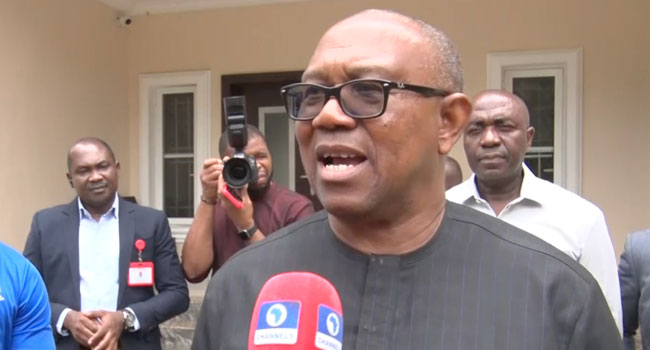

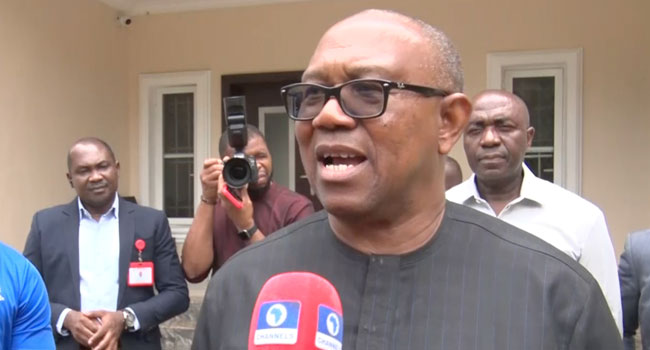
The 2023 Labour Party presidential candidate Peter Obi has renewed his pledge to serve only one term of four years if elected President in 2027.
Obi restated this in a statement, on Sunday, declaring “My One-Term, Four-Year Vow Is Sacrosanct.”
He cited examples of notable leaders who served with integrity and purpose, such as U.S. Presidents Abraham Lincoln and John F. Kennedy, as well as South Africa’s Nelson Mandela.
“One of the greatest American Presidents, Abraham Lincoln, served only four years, yet his legacy endures… Mandela chose to serve only one term… His decision was a deliberate act of leadership,” Obi said.
Acknowledging widespread distrust in Nigeria’s political class, Obi said many Nigerians no longer take politicians at their word.
“But even in this climate of cynicism, there are still a few whose actions have matched their words — whose integrity is built on verifiable precedent,” he argued.
He addressed skepticism over his one-term vow, saying: Recently, I became aware of two statements aimed, albeit indirectly, at my vow to serve only a single four-year term. One person remarked that even if I swore by a shrine, I still wouldn’t be believed. Another suggested that anyone talking about doing only one term should undergo psychiatric evaluation.
The last statement was made by Governor Charles Chukwuma Soludo of Anambra, who many see as taking pleasure throwing political jabs at Obi, who incidentally is also from Anambra.
Obi defended his record, recalling his time as Anambra State Governor. “I fulfilled each of those promises without deviation… My word is my bond.”
The former Anambra governor added, “Forty-eight months is enough for any leader who is focused and prepared to make a meaningful difference.”
He again hinted at his top priorities if elected, which are improving governance, tackling insecurity, prioritizing education and healthcare, fighting corruption, and moving Nigeria’s economy from consumption-based to production-driven.
 cpcnews.org