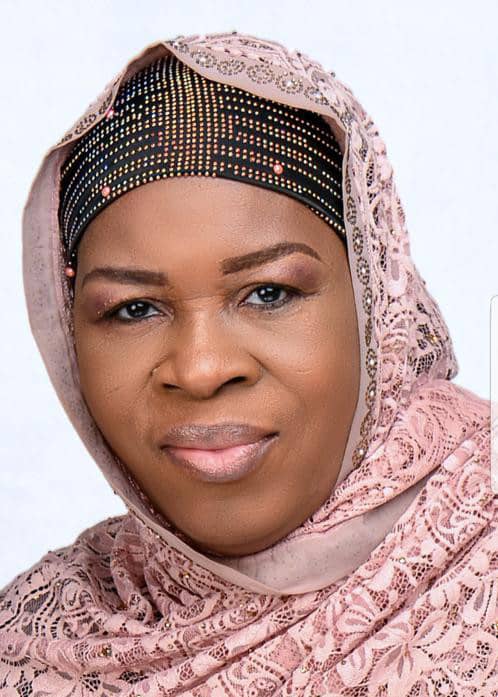

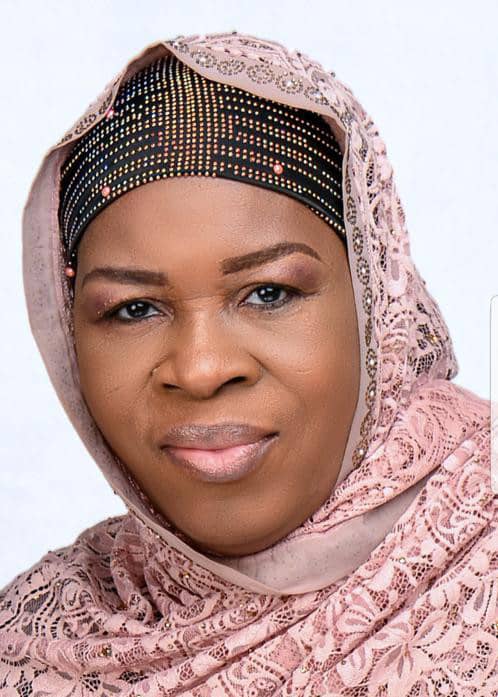
By Zainab Suleiman Okino
In the August 28, 2024 edition of my column, titled PDP on Self-Destructive Path?, I touched on the dangers of a lacklustre opposition and how the then PDP might be heading towards self-immolation if the party continued on the same trajectory that led to its defeat in 2015. That certainty of total annihilation is now here; not a question of if or when.
With only two governors remaining in the “middle and undecided,” the PDP will soon eclipse from our political space, thanks not only to its actions and inactions, but also to the booby traps and thorns strategically designed by the ruling party to weaken the opposition and ride unencumbered to victory in 2027.
The golden era of opposition
The golden era for the opposition occurred when Bola Ahmed Tinubu was in charge. As governor of Lagos, his troubles with President Olusegun Obasanjo were turned into opportunities to advance his political brand. By 2003, when the PDP, under Obasanjo’s influence, swept most states, Tinubu was the last man standing. Lagos State, under the Alliance for Democracy (AD), survived the onslaught; all other South-West states fell to the ruling PDP.
When Obasanjo withheld Lagos State local government funds, Tinubu took the legal route to recover them, while mobilising Lagosians to pay taxes to sustain governance. Never mind that the same Tinubu, as President, has held on to Osun State local government funds despite a court ruling against it.
He became the rallying point and poster boy of opposition politics. That he later advanced this trajectory towards the formation of the APC, becoming its leader with the power to nominate the vice president for Buhari, did not come as a surprise. Becoming president despite formidable forces against his candidature, through strategic alliances and political calculations and growing the APC into the behemoth it is today, is the icing on the cake.
However, what Nigerians did not foresee was that the party, (APC) the president so nurtured, would seek to obliterate other political parties under his presidency. Today, under his watch, the opposition can barely breathe.
It is tempting to exonerate the president, but the backstory, replete with intrigues and political machinations. Does the president not know that his appointee, FCT Minister Nyesom Wike, has destabilised and weakened the PDP, even allegedly leveraging state institutions such as the judiciary? Has he ever called him to order?
Who dunnit?
From the Senate under Godswill Akpabio altering key provisions of the Electoral Act such as removing real-time transmission of results to clauses designed to deter defections only after APC’s consolidation, the opposition space has been systematically constricted. Add to that, the alleged harassment, intimidation, and inducement of opposition figures, and opposition politics is now on life support.
The new legal framework that prohibits dual party membership is commendable in theory. But Wike has straddled two political camps since 2023. Similarly, the G5 governors such as Seyi Makinde (Oyo), Samuel Ortom (Benue), Okezie Ikpeazu (Abia), and Ifeanyi Ugwuanyi (Enugu) remained in the PDP while working against it in 2023. Today, such actions have been criminalised by a National Assembly widely seen as aligned with the executive.
Allegations that moles are being sponsored to destabilise opposition parties are deeply troubling and undermine the principles of multiparty democracy especially under a president with a strong opposition pedigree. The litigation involving Nafiu Bala Gombe against David Mark is a case in point. Why not defect outright instead of dragging the opposition through the courts? And which courts? The compromised judiciary?
We have travelled this road before. The PDP once attempted to weaken the opposition, and today it is on its knees. The APC would do well to learn from that history. While it has much to celebrate, it also has much to fear.
Even if the APC secures victory in 2027, what happens in 2031 and beyond, when many of today’s actors may have faded from the scene? The real concern should be the survival of institutional democracy and not temporary gains that favour only a fraction of the political class.
Opposition is the lifeblood of democracy. Undermining it risks entrenching opacity, poor governance, corruption, and lack of accountability. A good legacy must transcend what President Tinubu once described as a “sweet victory.”
PDP on a Self-Destructive Mission?(Revisited)
Nigeria needs a strong opposition to hold the government accountable. What remains uncertain is whether the PDP and Labour Party (LP) still possess the capacity to play that role effectively.
Since losing power in 2015, the PDP has been plagued by recurring crises. Just when recovery seems possible, another crisis occurs. The 2023 general election exposed deep fractures within the party.
Peter Obi’s exit to the LP and Rabiu Kwankwaso’s move to the NNPP drained significant support, particularly in the South-East and Kano. The rebellion of five PDP governors against Atiku Abubakar’s candidacy proved even more damaging.
Led by Nyesom Wike, the group’s actions not only undermined Atiku but also weakened the party, paving the way for APC’s victory. Ironically, Wike continues to wield influence within both the government and the PDP. What party tolerates such dual loyalty, “one leg in PDP and another in APC”?
The party’s attempts at discipline and reconciliation have often appeared futile. Disloyalty to the leadership hierarchy was the order of the day. Who exactly should be disciplined? And how do you reconcile factions that no longer share common political interests?
Leadership has also been a major challenge. Figures like Chief Bode George, though respected, have sometimes deepened divisions. Atiku Abubakar, rather than serving as a unifying figure, has remained polarising.
The failure to manage internal conflicts such as the controversy around Iyorchia Ayu’s chairmanship further eroded trust and cohesion within the party.
Today, with Atiku and Obi aligning under the ADC, questions remain about the viability of their coalition especially in the absence of strong grassroots structures and with many PDP governors now aligned with the APC. An effective opposition requires cohesion, discipline, and a clear policy alternative, not just resistance.
Politicians, especially of the PDP stock, often undermine their own parties, only to benefit from the resulting chaos. The PDP has harboured many such contradictions. We had hoped that the opposition, whether PDP, LP, NNPP, or now ADC- would rise above its challenges and strengthen democracy. But that hope, it seems, was premature, and perhaps fading.
All the same, political actors should understand that saving the opposition is synonymous with saving democracy. Unfortunately, current realities suggest that hope may have been misplaced.
Zainab Suleiman Okino (FNGE) chairs the Blueprint Editorial Board. She is a syndicated columnist and can be reached via: zainabokinoogmail.com
 cpcnews.org