

Pakistan’s Prime Minister Shehbaz Sharif said Monday he spoke with Iran’s President Masoud Pezeshkian, promising Islamabad’s help to bring peace to the region.
Iranian foreign ministry spokesman Esmaeil Baqaei said messages were received from “some friendly countries indicating a US request for negotiations aimed at ending the war”, but denied any such talks had taken place, Iran’s official IRNA agency reported.
– ‘Tremendous achievements’ –
Israeli Prime Minister Benjamin Netanyahu said he had spoken to Trump and acknowledged Washington thought a deal was possible, but vowed to continue striking Iran and Lebanon to protect Israel.
“Trump believes there is a chance to leverage the tremendous achievements of the IDF and the US military… in an agreement,” he said.
Israel kept up its bombardment on Beirut’s southern suburbs throughout the night, while a strike on Bshamoun, south of the capital, killed two people on Tuesday, according to Lebanon’s health ministry.
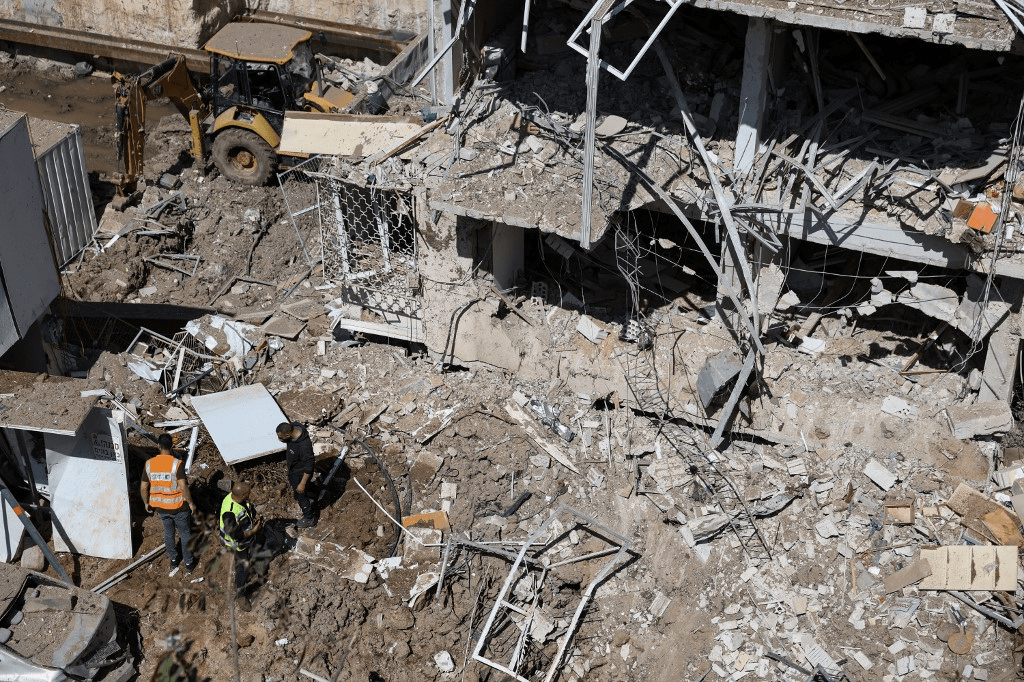
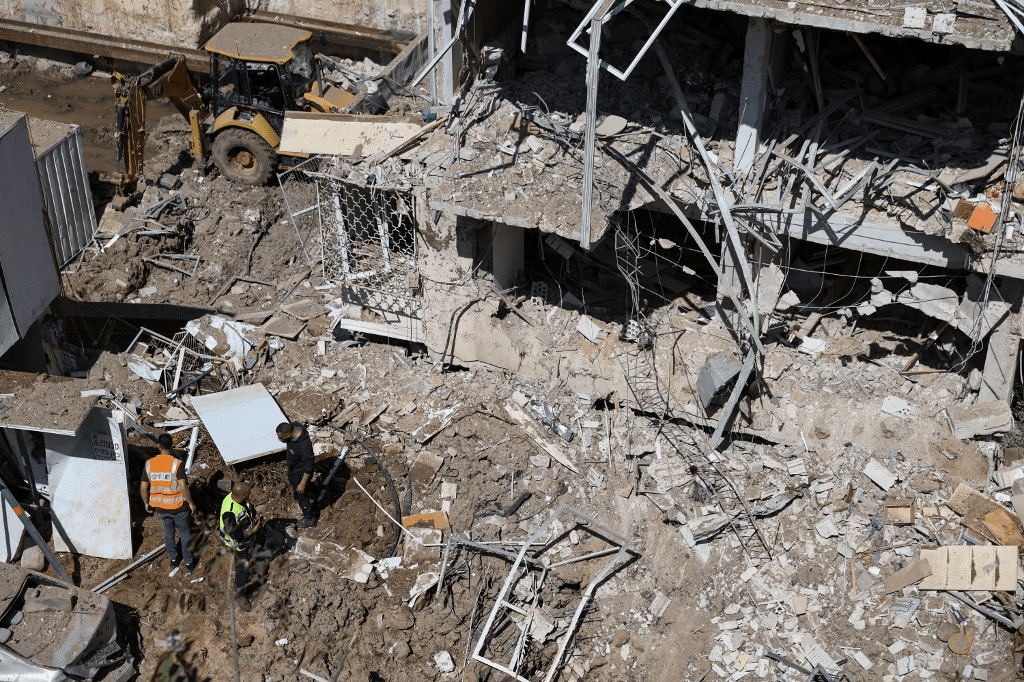
AFP images showed smoke billowing from gutted buildings in Beirut, as rescuers picked through the rubble and twisted metal.
Strikes also targeted several service stations linked to Iran-backed Hezbollah that Israel has vowed to dismantle.
Israel’s attacks in Lebanon have killed more than 1,000 people and displaced more than a million, according to Lebanon’s health ministry.
The war has killed at least 3,230 Iranians, including 1,406 civilians, according to the US-based Human Rights Activists News Agency. AFP cannot access strike sites nor independently verify tolls in Iran.
– ‘Sudden pivots’ –
On Monday, Iran’s neighbours breathed a sigh of relief after Trump stepped back from his threat to target the country’s power infrastructure.
Tehran had vowed to deploy naval mines and strike power and water infrastructure across the region in retaliation, threatening to escalate an energy crisis of already historic proportions.
“Trump has been a master of sudden pivots and switches. So it’s sometimes hard to know if there is a strategy or if it’s just always improvisation,” said Garret Martin, a professor of international relations at American University in Washington.
Thousands of US Marines are headed to the Middle East, reinforcing America’s presence following weekend speculation Trump was mulling ground operations either to seize Iranian oil assets or to forcibly reopen the Strait of Hormuz.
Since the war erupted, Tehran has retaliated against US-Israeli attacks by throttling traffic through the Strait, a conduit for one-fifth of global crude, and by hitting Gulf energy sites and US embassies as well as targets in Israel.
International Energy Agency chief Fatih Birol warned if the war is protracted, daily oil losses would pave the way for a crisis worse than the combined impact of both 1970s oil shocks and Russia’s invasion of Ukraine.
Oil prices have been driven above $100 a barrel by the conflict, but they tumbled sharply after Trump’s announcements.
 cpcnews.org